
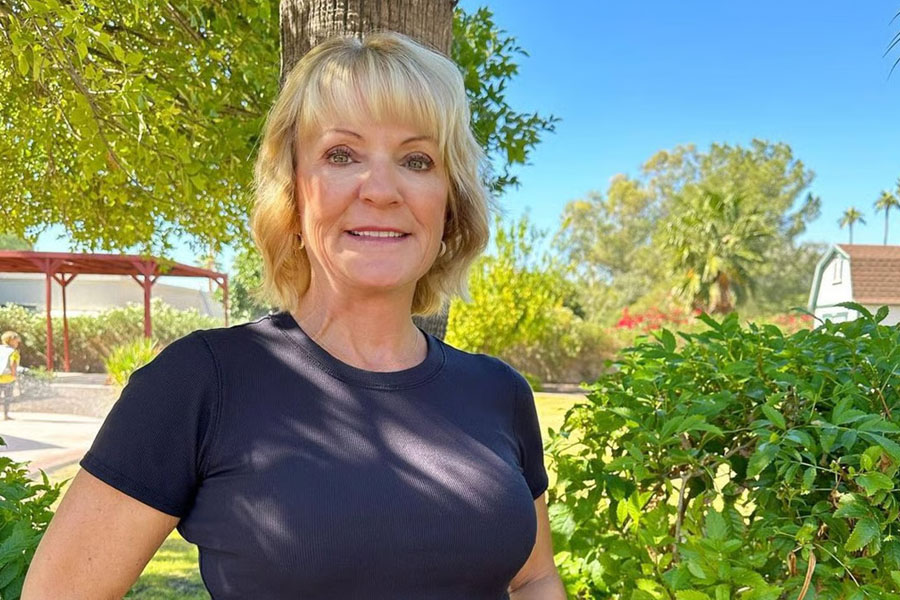
A Life Lived Between Private Rooms and Public Stages
Pamela Ann Stepnick occupies a rare position in contemporary culture. She is neither a background parent nor a manufactured celebrity. She is a figure who crossed the threshold from private life into public narrative without abandoning the instincts that shaped her early years. Her story now stretches across hospital corridors, living rooms turned into sets, boxing arenas roaring with lights, and the quiet intimacy of grandmotherhood.
What makes Pamela Ann Stepnick compelling is not proximity to fame alone. It is the way she learned to stand inside it without dissolving. She did not arrive as a performer looking for an audience. The audience arrived after the fact.
Early Identity and the Discipline of Care
Before cameras, Pamela Ann Stepnick was grounded in nursing. That work left fingerprints on how she moves through public life. Nursing is not glamorous. It is repetitive, emotionally demanding, and built on trust. You learn to read rooms quickly. You learn when to speak and when to stay still. Those habits linger.
This background helps explain why her later visibility never reads as frantic. Even when surrounded by spectacle, she tends to project steadiness. Where others react, she observes. Where chaos swells, she anchors.
The transition from scrubs to social feeds was not a reinvention. It was a relocation of the same skill set. Caregiving shifted form, not purpose.
Marriage, Separation, and the Shape of the Household
Pamela Ann Stepnick’s early family structure was marked by change. Her divorce from Greg Paul occurred while her sons were still young. That separation created a household defined by adaptation. Parenting became a solo responsibility in many ways, with the added pressure of supporting ambitious, restless children.
When she married David Stepnick in 2004, the family gained a stabilizing presence. David did not replace what came before. He reinforced what was already there. In public glimpses, he appears less as a spotlight figure and more as structural support. That balance allowed Pamela Ann Stepnick to expand outward without the household fracturing inward.
The timeline matters. Stability arrived before fame exploded. That order changed everything.
Raising Sons Who Outgrew the Room
Logan Paul and Jake Paul grew faster than the spaces meant to contain them. Their rise unfolded at internet speed, where mistakes freeze into screenshots and success multiplies overnight. Pamela Ann Stepnick was not raising performers for a stage that did not yet exist. She was raising sons who would eventually discover that the world was watching.
This distinction is crucial. She did not design a brand family. She adapted to one.
As their careers accelerated, she became a translator between eras. She spoke the language of offline consequences in an online world. That role expanded as controversy followed success. At times she defended. At times she withdrew. At times she let silence speak.
Becoming VlogMom Without Losing the Person
The nickname VlogMom sounds playful, almost disposable. In practice, it became a platform. Pamela Ann Stepnick’s content did not chase trends. It documented presence. Birthdays. Travel days. Nervous mornings before big events. The camera functioned as a window, not a megaphone.
Audiences responded because the tone felt unforced. She did not posture as perfect. She did not perform outrage. She allowed contradictions to remain visible. That honesty became currency.
Over time, the platform grew. Followers accumulated. Appearances became expected. Yet the core remained domestic. Even in public, her persona revolved around home.
Ringside Visibility and the Cost of Watching
Few images capture the emotional tax of fame like a parent at ringside. Pamela Ann Stepnick has become a familiar presence during her sons’ fights. Cameras find her face during moments of impact. Her reactions circulate faster than the punches themselves.
Recently, she has spoken openly about the toll. Watching your child enter physical danger as entertainment changes the parental equation. Pride collides with fear. Support wrestles with worry.
Her public statements reflect a shift. Less celebration of spectacle. More concern for longevity. She has voiced hopes that her sons explore futures beyond constant physical risk. This is not a rejection of their paths. It is a mother recalibrating as stakes rise.
The Memoir as Reclamation
The announcement of Pamela Ann Stepnick’s memoir marks a turning point. Writing a book is an act of ownership. It allows her to frame the narrative rather than react to it. The memoir promises reflection on motherhood under surveillance, on mistakes amplified by algorithms, and on resilience forged without instruction manuals.
This move signals a transition from subject to author. She is no longer content to be referenced through others. She is stepping into direct address.
The timing matters. The family story has matured. Distance now allows clarity. The book is positioned not as gossip but as testimony.
Speaking to a Generation of Watched Parents
Beyond family memoir, Pamela Ann Stepnick has begun occupying a wider cultural role. She speaks about parenting in the digital age, about raising children whose mistakes are monetized, and about learning boundaries when the internet erases them.
Her metaphor of building an airplane mid flight resonates because it captures the improvisational nature of modern parenting. There was no handbook for viral adolescence. There was only response.
This framing positions her as more than a celebrity parent. She becomes a reference point for others navigating similar terrain at smaller scales.
Grandmotherhood and the Soft Power of Continuity
With the arrival of her granddaughter Esmé, Pamela Ann Stepnick entered a new chapter. The energy shifted. Posts softened. Language warmed. The nickname Glama carries both humor and pride.
Grandmotherhood introduces a counterweight to spectacle. It slows the narrative. It reminds audiences that families outlast algorithms. In these moments, her presence feels less like content and more like inheritance.
This role does not erase what came before. It reframes it.
Wealth, Work, and the Quiet Business of Visibility
Pamela Ann Stepnick’s financial standing reflects accumulated visibility rather than sudden windfall. Income streams include content monetization, brand collaborations, appearances, and now publishing. The scale remains modest compared to her sons, yet significant enough to grant autonomy.
What stands out is not the number but the method. Her earnings grew alongside her audience, not ahead of it. That pacing protected credibility.
She never sold access to crisis. She monetized continuity.
FAQ
Frequently Asked Questions
Who is Pamela Ann Stepnick?
Pamela Ann Stepnick is a former nurse, social media personality, and the mother of Logan Paul and Jake Paul. She is also a grandmother and a public figure in her own right.
What is Pamela Ann Stepnick known for outside of her sons?
She is known for her VlogMom presence, her commentary on parenting in the digital age, and her upcoming memoir that explores family life under public scrutiny.
Is Pamela Ann Stepnick still active on social media?
Yes. She maintains an active presence across major platforms where she shares family moments, personal reflections, and public appearances.
Has Pamela Ann Stepnick spoken about her sons’ boxing careers?
Yes. She has expressed both support and concern, particularly regarding the physical risks involved, and has shared her emotional perspective as a parent.
What role does grandmotherhood play in her public life?
Becoming a grandmother has added a softer dimension to her public identity, emphasizing continuity, care, and generational perspective.
Is Pamela Ann Stepnick involved in any projects beyond social media?
She is preparing the release of a memoir and has begun speaking publicly about parenting and visibility in the modern media landscape.

